Water, Ice, and Steam in Sandustry
Fluids that make Wet Sand possible—or flood your mine if you ignore pressure and phase changes.
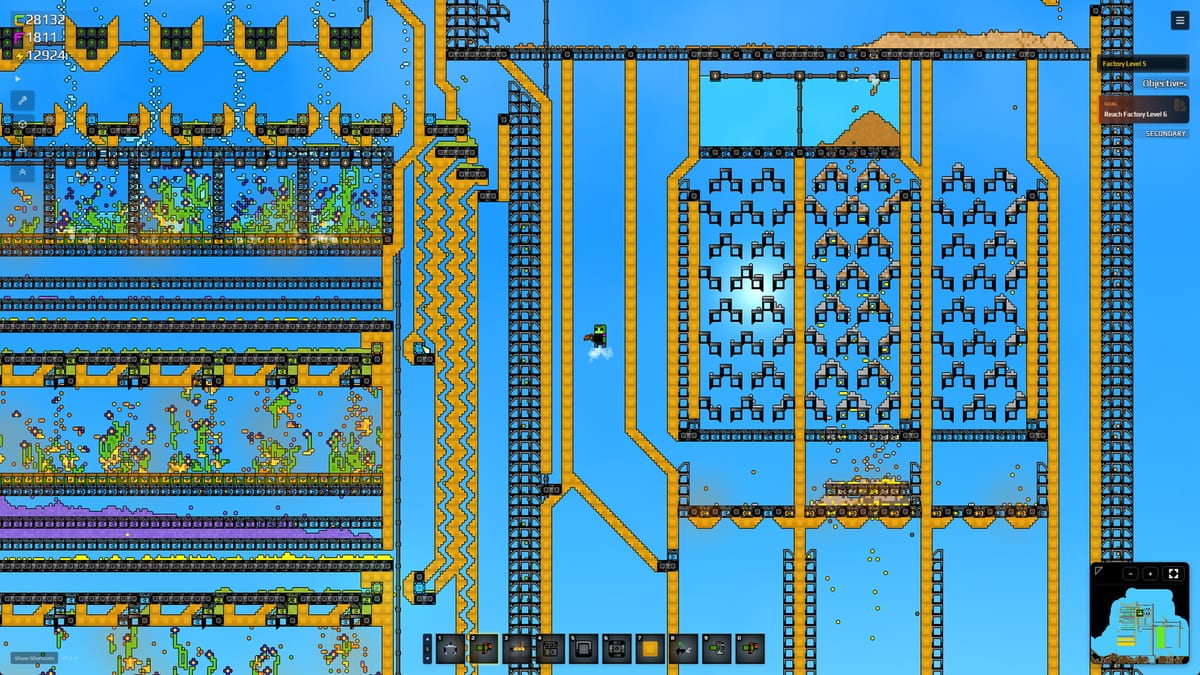
Water turns Sand into Wet Sand, the feedstock for gold. Ice and Steam are water’s cold and hot phases, and all three behave as fluids with pressure, pooling, and phase change rules that can help or ruin a factory. Players who master water early spend less time digging out flooded tunnels and more time feeding Shakers.
Water as a crafting fluid
The foundational recipe is simple: one Sand plus one Water yields two Wet Sand when mixed deliberately (Sand and Wet Sand). Accidental contact—breaking a wall into an underground lake, or overshooting a hose—applies the same rule across entire fields. That is why controlled wetting pools beat “water everywhere” strategies.
Standing water has depth. Shallow pools mix quickly but spill easily when new sand lands. Deep pools delay mixing and can hide Slag or Gold at the bottom if you dump shaker outputs nearby. Use Conveyor Belts to drop sand at a fixed point and scoop Wet Sand from a predictable tile.
Ice and freezing hazards
Cold biomes and Cryoblaster tools create Ice from water. Ice blocks flow until melted—Flamethrower heat or ambient warmth converts it back. A frozen wetting pool stops your gold loop cold: dry sand lands on ice and never becomes Wet Sand until the tile thaws.
Insulate critical water lines away from cryo tools and open ice caves. If you must dig through ice, melt a channel first rather than breaking ice into your main reservoir. Tool priorities for heat versus cold appear on Tools and Weapons Priority.
Steam and heat
When water meets sustained heat, it becomes Steam. Steam occupies space and can push liquids upward through vents if pressure has nowhere to go. Unvented steam pockets near wetting pools reduce effective water volume and confuse players who count water tiles manually.
Capture steam with Pipes and Pumps and Liquid Vents placed above collection tanks, or route heat away from water storage entirely. The Water Management guide covers steam-backed wetting designs that keep Wet Sand output steady without flooding upper tunnels.
Steam rises and pools on ceilings. Community testing and the official material notes agree it often condenses as rain after about 30 seconds even if it never reaches the sky. That makes steam a pre-pipe way to move water — and a way to rain into lava or slag burns if you ignore the ceiling. Snow is the other renewable water path: burn snow or dug Firn to recover Water. Full snow rules live on Snow, Firn, and Frostbed.
Pipes, pumps, and vents
Buckets work for the first hour; factories need Pipes to move water horizontally and Pumps to lift it vertically. Liquid Vents release captured fluids at a destination—critical when your wetting pool sits above your dig site. Misaligned vent direction is a common source of accidental flooding.
Pair pipe networks with one-way buffer tanks: a small reservoir between source lake and wetting pool prevents lake drainage from collapsing terrain into your base. See the full building breakdown on Pipes and Pumps.
Ratios with sand and redsand
Community planning often cites roughly two Sand to three Water before RedSand enters the economy (Material Ratios). Water is the flexible leg of that ratio—easier to store in pipes than sand in open pits. Track consumption by watching Wet Sand output, not water tile count; phase changes hide water in steam or ice forms.
Lava and extreme heat
Lava appears in deeper layers and sits between RedSand and Gold on density charts. Lava plus water creates violent phase interactions—steam bursts, terrain damage, and lost materials. Treat lava like a separate logistics line with Filters and remote vents, not as a wetting shortcut.
Bucket phase vs pipe phase
Most players hand-carry water for the first shaker row. Switch to Pipes and Pumps when either distance or shaker count makes buckets the bottleneck—usually around two continuous shakers. Signs you are ready: mixers sit dry while sand piles grow, or you spend more time hauling water than mining sand. Pipes do not change the 1+1=2 wetting rule; they only stabilize delivery so ratio planning on Material Ratios becomes meaningful.
Seasonal hazards in mixed biomes
Factories that span surface sand and cold caves inherit both flooding and freezing risks on one water network. Insulate pipe runs through ice with heat sources or route water around cold tiles entirely. A single frozen segment upstream of a wetting pool stalls gold output everywhere downstream—check ice before blaming shaker placement.
For gold and slag after Wet Sand exists, continue to Gold and Slag. For the full material list, see the Materials Hub.
Frequently Asked Questions
Quick answers to the most common Sandustry questions.
How much Water do I need for Wet Sand?
One Water converts one Sand into two Wet Sand when mixed correctly. Community ratios often plan ~three water to two sand early—see Material Ratios.
Why did my wetting pool freeze?
Ice formed from cold biome air or cryo tools. Melt with flamethrower heat and keep pools away from ice veins—details in the ice section above.
How do I handle steam buildup?
Vent steam with pipes and liquid vents, or move heat sources away from water storage. Read Pipes and Pumps and Water Management.
Can I use lava to wet sand?
No—lava destroys materials and creates hazardous steam. Route lava separately using density notes on RedSand and Fluxite.
When should I switch from buckets to pipes?
When distance or vertical lift makes bucket runs slower than shaker consumption. Pipes stabilize ratios once Wet Sand demand exceeds manual hauling.
Does steam turn back into water on its own?
Yes — leftover steam typically rains after about **30 seconds**, even without hitting the sky. Pair that with burned Snow and Firn if lakes run dry.